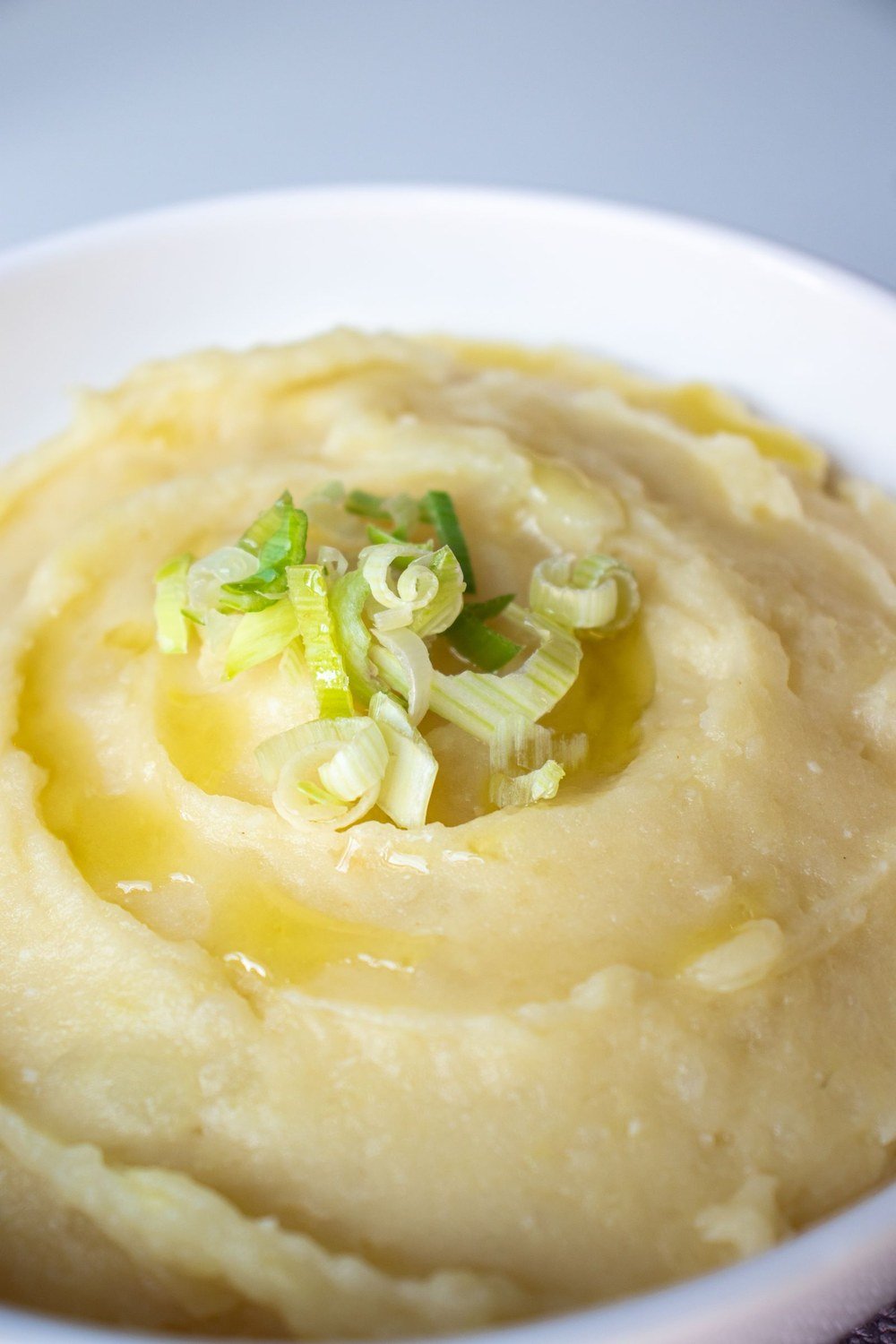
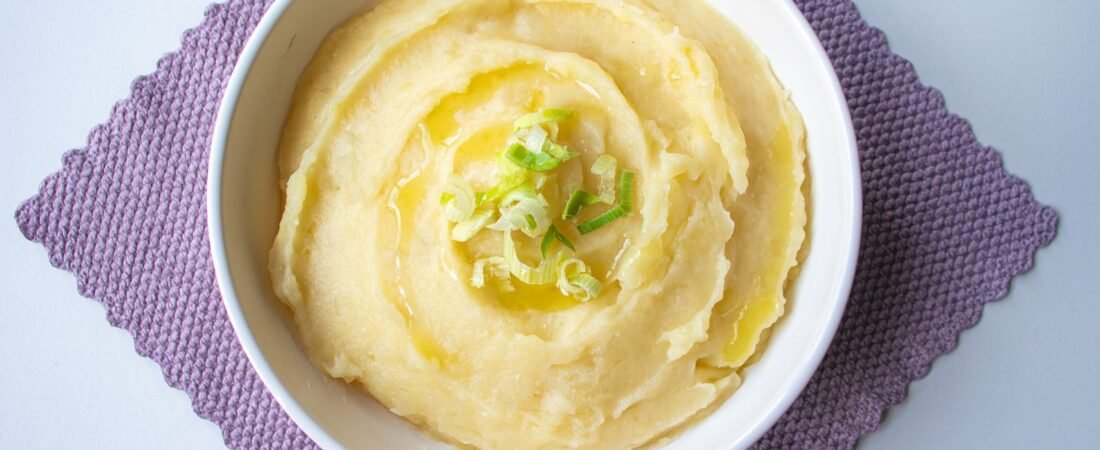
Thanksgiving dinner has enough moving parts without a pot of potatoes demanding your attention at the exact moment the turkey comes out of the oven. These creamy garlic mashed potatoes solve that problem in the simplest way possible: you make them ahead, refrigerate them, and reheat them gently while the turkey rests. No last-minute mashing, no lumpy gravy-side panic, and no compromise on flavor.
The method is deliberately simple. The potatoes simmer with whole garlic cloves, which turn sweet and mellow as they cook, so the finished dish tastes rich and garlicky without any harsh, raw bite. Warm butter and milk, plus a spoonful of sour cream for a gentle tang, bring everything together into a mash that is fluffy, smooth, and sturdy enough to hold a pool of gravy.
Whether this is your first Thanksgiving or your fifteenth, this is a side dish that respects your time. Make it on Wednesday, and Thursday gets noticeably calmer.
Why This Recipe Works
- Make-ahead friendly. The potatoes are fully cooked, mashed, and seasoned a day in advance, then reheated with a splash of warm milk. The texture holds up beautifully.
- Mellow garlic flavor. Simmering the garlic with the potatoes softens its sharpness, so the garlic is present in every bite without overpowering the rest of the plate.
- Simple, familiar ingredients. No special equipment and nothing hard to find — a pot, a masher, and pantry basics.
- Fluffy, not gluey. Warm dairy and gentle, brief mashing protect the texture, which is where most mashed potato recipes go wrong.
- Flexible serving size. The recipe makes six generous servings and doubles easily for a bigger table.
If you are planning the rest of your menu, you will find more sides, mains, and holiday baking ideas on our Recipes page.
Choosing the Best Potatoes for Mashing
The potato you choose matters more than any other decision in this recipe. Starchy and all-purpose potatoes break down into a smooth, fluffy mash, while very waxy potatoes can turn dense and gluey if you work them too much. Yukon Golds sit right in the middle — naturally buttery in flavor, creamy in texture, and forgiving if your mashing runs a minute long.
Here is a quick comparison to help you shop with confidence:
| Potato variety | Texture when mashed | Flavor | Best for |
|---|---|---|---|
| Yukon Gold | Creamy and dense-smooth | Naturally buttery | This recipe; an all-round first choice |
| Russet | Light and very fluffy | Mild, earthy | Classic fluffy mash; absorbs lots of butter |
| Red potatoes | Chunky and firm | Slightly sweet | Rustic, skin-on smashed potatoes |
| Fingerling | Dense and waxy | Nutty | Roasting; not ideal for a smooth mash |
| Sweet potatoes | Soft and silky | Sweet | A separate sweet mash with warm spices |
If Yukon Golds are unavailable, russets are the best substitute — just handle them gently, because their high starch content turns gluey faster when overworked.
Ingredients
You will need:
- 2 lb (900 g) Yukon Gold potatoes, peeled and cut into even chunks
- 4–5 garlic cloves, peeled
- 1 tsp fine salt, plus more to taste
- 4 tbsp (57 g) unsalted butter, plus a little extra to serve
- ½ cup (120 ml) whole milk or half-and-half, warmed
- ¼ cup (60 g) sour cream
- ¼ tsp black pepper
- 2 tbsp chopped fresh chives or parsley, to serve
A note on the dairy: warm milk and melted butter blend into hot potatoes far more smoothly than cold dairy straight from the fridge. Cold liquid cools the potatoes down and encourages over-mixing, which is the fast route to a gummy texture.
Equipment
A large pot, a colander, a potato masher, and a small saucepan for warming the dairy are all you need. A ricer produces an especially smooth mash if you own one, but it is entirely optional. Avoid a food processor or blender — their blades rupture the potato starch and turn the mash sticky.
How to Make Creamy Garlic Mashed Potatoes
Step 1: Boil the potatoes and garlic
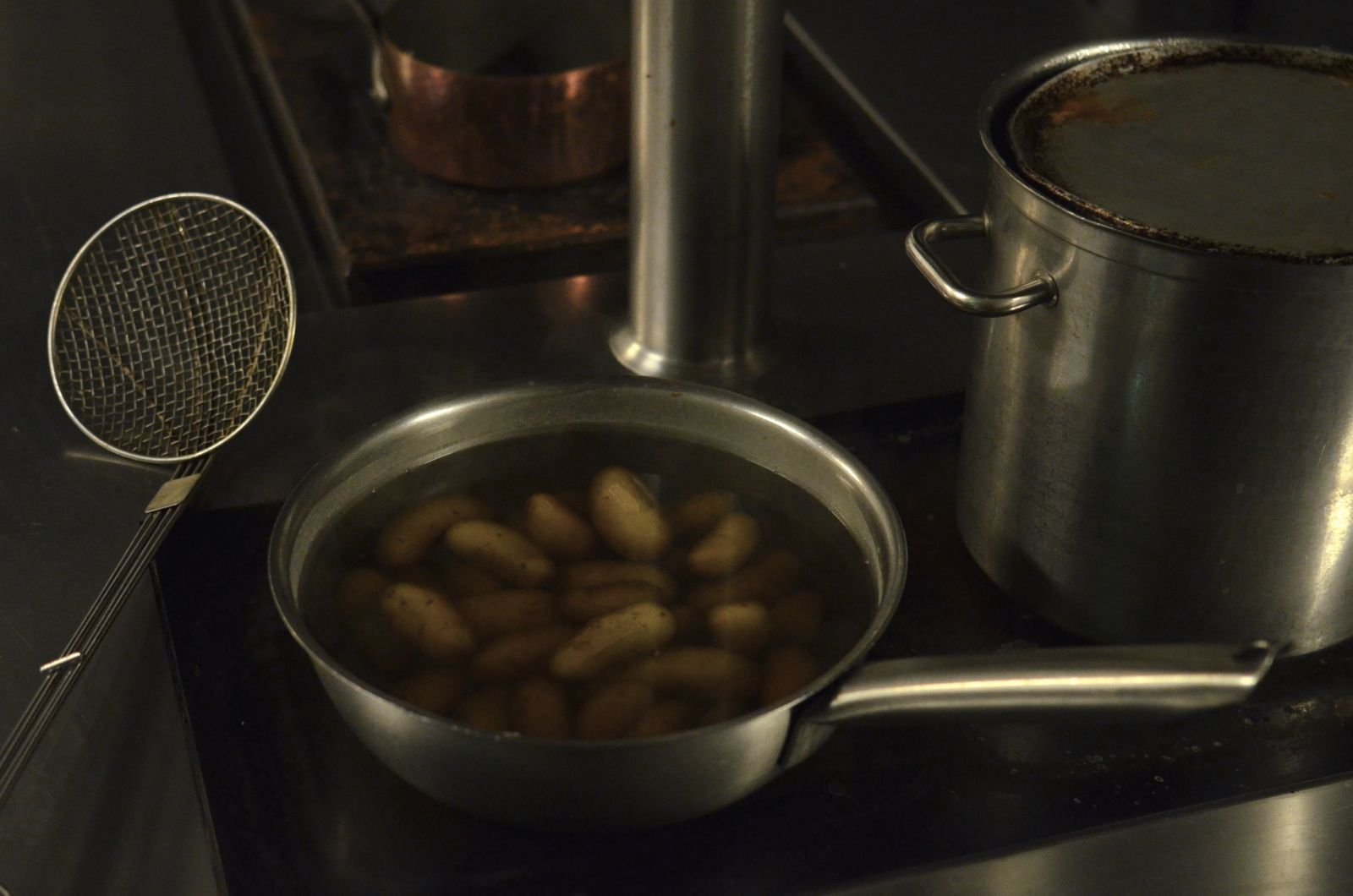
Put the potato chunks and the peeled garlic cloves in a large pot. Cover with cold water by about 1 inch (2.5 cm) and add the teaspoon of salt. Starting in cold water helps the potatoes cook evenly, so the outsides do not turn mushy before the centers are tender.
Bring the pot to a boil over high heat, then reduce to a steady simmer. Cook for 20–25 minutes, until a fork slides into a chunk with no resistance and the potato begins to break apart.
Step 2: Warm the dairy
While the potatoes simmer, combine the milk and butter in a small saucepan over low heat. Warm just until the butter melts and the mixture is hot to the touch but not boiling. Keep it warm until the potatoes are ready.
Step 3: Drain and dry
Drain the potatoes and garlic thoroughly in a colander. Return them to the hot, empty pot and set it over low heat for about 1 minute, shaking the pot gently. This brief step steams off the surface water — and drier potatoes absorb butter and milk better, which means better flavor in every bite.
Step 4: Mash gently
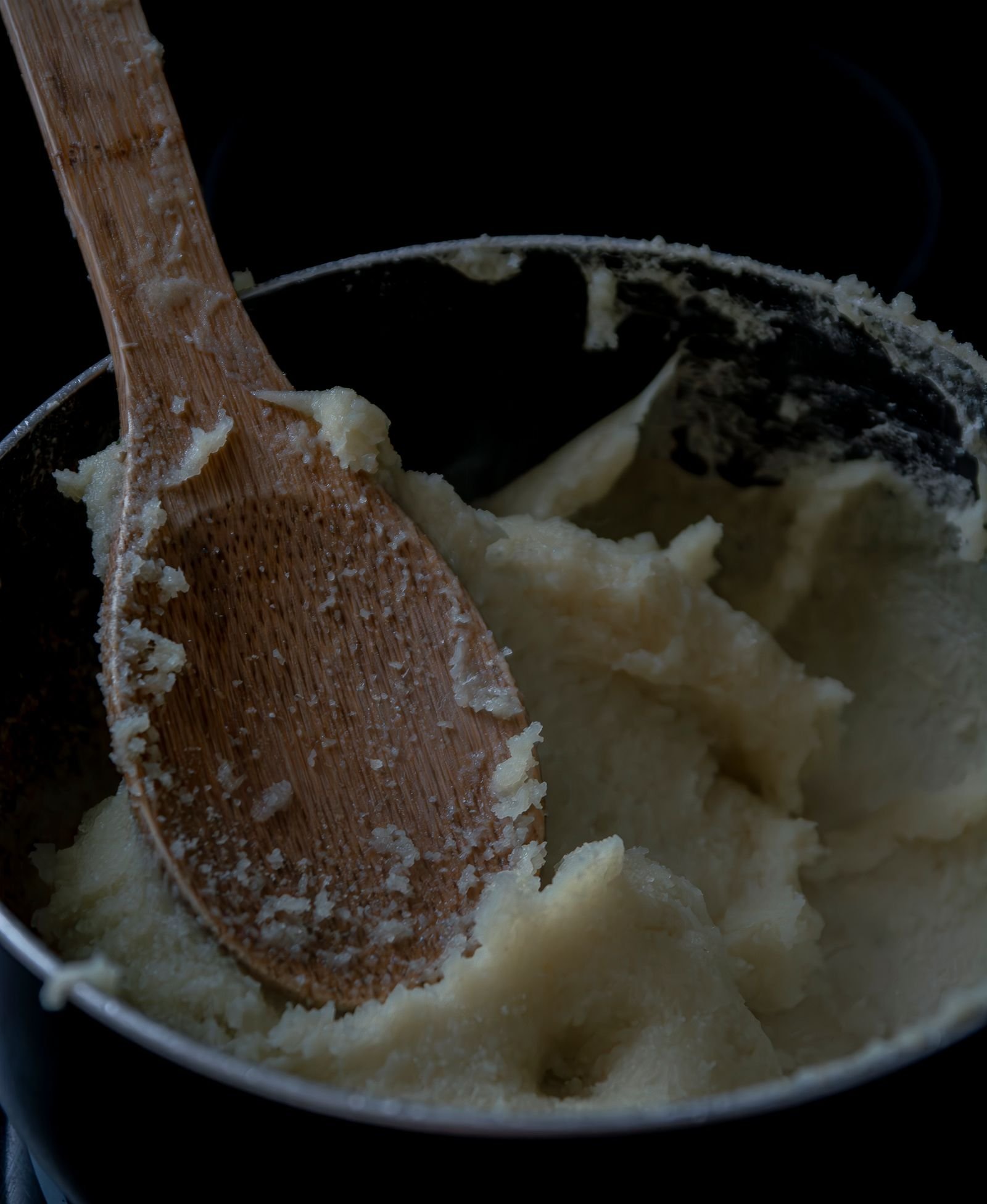
Mash with a potato masher until the potatoes are mostly smooth. A few small lumps are perfectly fine and keep the texture honest. Stop as soon as the mash comes together; every extra pass makes it denser.
Step 5: Add the dairy and season
Pour in the warm butter and milk, then stir in the sour cream and black pepper with a spoon or spatula — stirring, not mashing, from this point on. Taste, and add more salt a pinch at a time until the flavor tastes rounded and complete. Potatoes need confident seasoning.
Step 6: Serve
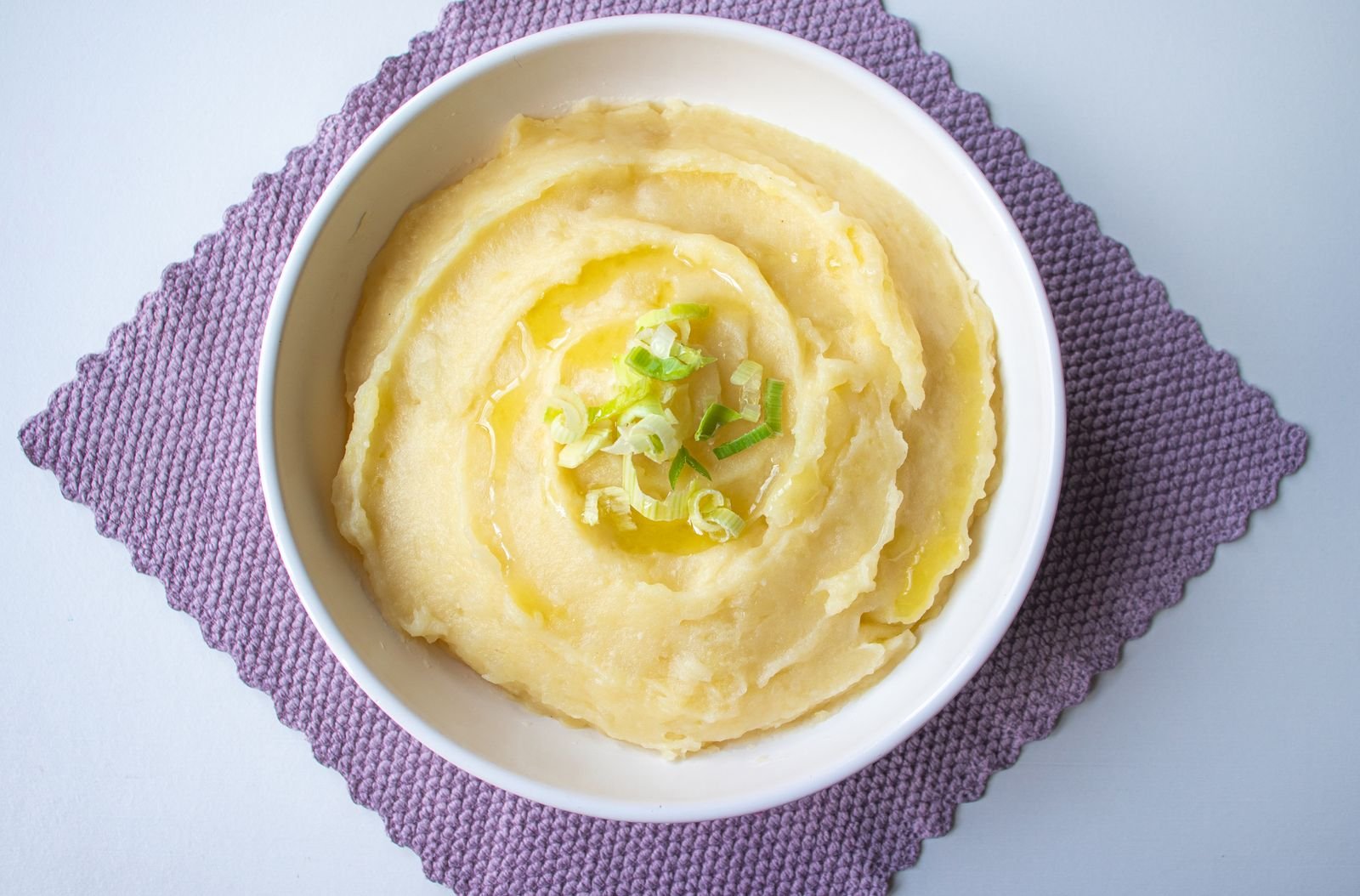
Spoon the mash into a warm serving bowl, swirl the top with the back of the spoon, and add a small knob of butter to melt into the swirls. Finish with the chopped chives or parsley and serve right away — or follow the make-ahead plan below.
Tips for Fluffy Mashed Potatoes Every Time
- Cut even chunks. Pieces of the same size finish cooking at the same time, so nothing is underdone or waterlogged.
- Salt the cooking water. Seasoning from the start builds flavor through the whole dish, not just on the surface.
- Always warm the dairy. This is the single easiest upgrade for texture and flavor.
- Do not overwork the mash. Mash briefly, then stir. Overworked potatoes release too much starch and become gluey.
- Season, taste, adjust. Salt needs vary with the potatoes and butter, so the final taste test is not optional.
Working in a smaller kitchen this holiday? Our guide to making the most of limited holiday counter space walks through how to stage a big meal without a big kitchen.
Make-Ahead and Reheating Instructions
This is where the recipe earns its place on a holiday menu. Make the mashed potatoes completely — through seasoning — up to 1 day ahead. Let them cool, transfer to an airtight container, and refrigerate.
You have three good reheating options:
- On the stove (best texture): Spoon the potatoes into a saucepan with a splash of warm milk. Cover and warm over low heat for 10–12 minutes, stirring often and adding milk a little at a time until they are creamy again.
- In the oven: Transfer to a buttered, oven-safe dish, dot with butter, and cover with foil. Bake at 350°F (175°C) for 25–30 minutes, until hot all the way through, then stir well before serving.
- In the microwave: Heat in a covered, microwave-safe bowl in 1-minute bursts, stirring between each, with a splash of milk as needed.
Whichever method you choose, add a final knob of butter and a last pinch of salt after reheating. That small finishing step makes day-old potatoes taste freshly made.
Easy Variations and Substitutions
- Russet potatoes: Swap them in at the same weight for a lighter, fluffier mash. Mash them even more gently.
- No sour cream: Use plain Greek yogurt for a similar tang, or simply add a little extra butter and milk.
- Dairy-free: Replace the butter with good olive oil and the milk with warm, unsweetened oat milk. The result is lighter but still creamy.
- Stronger garlic flavor: Roast the garlic cloves first for a deeper, sweeter flavor, or add ½ teaspoon of garlic powder along with the dairy.
- Herbed version: Stir in finely chopped rosemary or thyme with the chives for a more aromatic holiday side.
- Cheesy version: Fold in a handful of finely grated sharp cheddar or parmesan just before serving.
What to Serve with Mashed Potatoes
Mashed potatoes are the anchor of the Thanksgiving plate: they sit happily next to roast turkey, catch the gravy, and balance richer dishes like stuffing and cranberry sauce. If you are setting the table as well as cooking, our ideas for a simple, cozy Thanksgiving table keep the focus on warmth rather than fuss.
They are just as useful after the holiday. Leftover mash makes excellent potato cakes — mix with a little flour and an egg, pan-fry until crisp — and it is the classic topping for shepherd’s pie. And when you are wondering what to do with the rest of the turkey, a pot of leftover turkey soup turns the whole bird into a second, completely different meal.
Storage
- Refrigerator: Store in an airtight container for up to 3 days.
- Freezer: Freeze for up to 1 month. The butter and sour cream in this recipe help the texture hold up. Thaw overnight in the fridge, then reheat with a splash of milk, stirring well.
- Reheating leftovers: Low, gentle heat and a little added liquid bring the creamy texture back. Avoid boiling, which can make the mash grainy.
Nutrition (Estimated)
Per serving (one of six): about 245 calories, 11 g fat, 33 g carbohydrate, 4 g protein, 3 g fiber, and 320 mg sodium. These values are an estimate based on the ingredients listed and will vary with the exact products and portion sizes used.
Frequently Asked Questions
Can I make mashed potatoes the day before Thanksgiving?
Yes — that is exactly what this recipe is designed for. Make them fully, cool, and refrigerate for up to 24 hours. Reheat gently on the stove with a splash of warm milk and a little extra butter, and they will taste freshly made.
Why did my mashed potatoes turn out gummy?
Gumminess almost always comes from overworking the potatoes or blending them. Blenders and food processors rupture the starch cells. Mash by hand, add warm dairy, and stop mixing as soon as the potatoes are smooth.
Can I use a hand mixer instead of a masher?
You can, briefly and on the lowest speed, once the potatoes are already mostly broken down. A masher gives you more control and a fluffier result, so it is the safer choice for most cooks.
What are the best potatoes for mashed potatoes?
Yukon Golds are the best all-round choice because they are naturally buttery and mash up creamy. Russets are the best alternative for a lighter, fluffier texture. Waxy potatoes like fingerlings are better saved for roasting.
Can I keep mashed potatoes warm for serving?
Yes. Hold them, covered, over the lowest possible heat with a splash of milk, stirring now and then, for up to about an hour. A slow cooker on its warm setting also works well for a buffet-style table.
How do I fix mashed potatoes that are too thin?
Simmer them gently, uncovered, for a few minutes to evaporate excess liquid, stirring constantly. You can also fold in a spoonful of instant potato flakes, though the evaporation method keeps the flavor purest.
Can I make this recipe dairy-free?
Yes. Use olive oil in place of butter and warm, unsweetened oat milk in place of the milk and sour cream. The texture will be a little lighter, but the garlic flavor carries the dish.
How much mashed potato should I make per person?
A good planning figure is about ½ lb (225 g) of raw potatoes per person, which gives roughly ¾ cup of mash. For Thanksgiving, when appetites and leftovers both run large, rounding up is never a mistake.
Can I freeze mashed potatoes?
Yes, for up to 1 month. Recipes with butter and sour cream, like this one, freeze best. Thaw overnight in the refrigerator and reheat slowly with extra milk, stirring until creamy again.
Do I have to peel the potatoes?
No. Skin-on mash made with Yukon Golds is rustic and flavorful — just scrub the potatoes well. Peeling gives the smoothest, most classic result, which is why this recipe calls for it on a holiday table.
Conclusion
Good Thanksgiving cooking is mostly good planning, and these creamy garlic mashed potatoes are planning you can eat: one pot, simple ingredients, a full day of make-ahead flexibility, and a texture that stays fluffy and rich from the first serving to the last spoonful of leftovers. Make them on Wednesday, reheat them while the turkey rests, and spend that saved half hour where it belongs — with the people at your table.
If you make this recipe, save it to your Thanksgiving board so it is easy to find next year, and tell us how it went in the comments. Then keep planning with the rest of our holiday recipes — your future self, standing in a calm kitchen, will be glad you did.